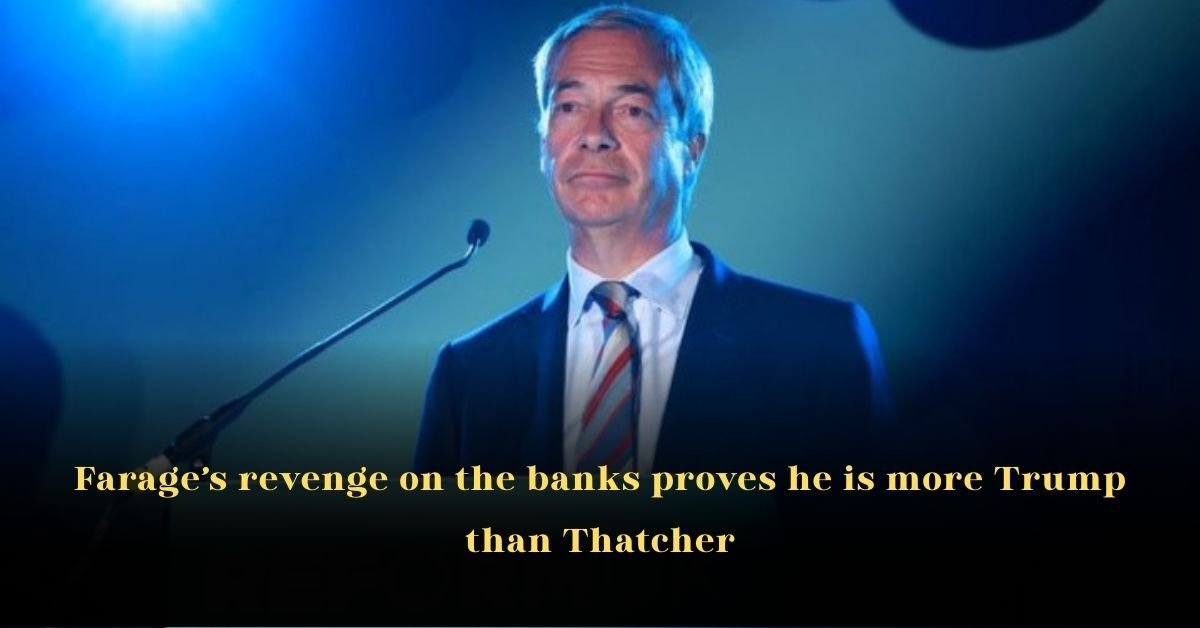
Nigel Farage is changing. For a long time, people saw him as a big fan of Margaret Thatcher’s ideas: a very small government and free markets. Now, he is promising to tax big banks more. This shows he is moving to a populist plan. This plan is driven more by anger than by old ideas. By attacking London’s banks, he is copying a style used by Donald Trump. It is about political revenge, not just policy. He wants to use public anger. He is not trying to be like Thatcher anymore. He is trying to be like Trump in Britain. He wants to lead “forgotten people” against a “corrupt” financial elite.
A Trumpian Pivot on the Davos Globalist Stage
In January 2026, Nigel Farage went to a meeting of world leaders and bankers in Davos. This is strange. He usually criticizes these powerful people. But he was not there to join them. He was there to fight them. He told them he would stop the “free money” banks get from the Bank of England. This would cost banks billions. His reason was personal. He said, “Some of the banks won’t like it. Well, I don’t like the banks very much because they debanked me, didn’t they?” This is the key to his change. Thatcher would talk about bank reform for the economy. Farage talks about it as payback for what they did to him. He turns a big economic issue into a simple story: a wronged leader versus a bad establishment.
Contradictions in Reform UK’s Economic Vision
This new bank tax shows a big problem in Reform UK’s plans. The party’s general idea is for a smaller state with fewer rules. But this policy is a big, specific tax on one industry. This does not match. The plan seems driven by populist anger and payback, not by clear economic ideas. The ideas do not fit together. A flat tax was promised, but a targeted tax is proposed. It is about punishment, not reform. The banking industry says this could hurt the UK economy. Money and investment might leave.
Why the “New Farage” is Outperforming the Old Guard
Even with these problems, Farage’s move is working in politics. By talking tough on banks and protecting some industries, he is winning over voters in places like the “Red Wall.” These voters feel left behind by the main parties. This is like Donald Trump. Trump mixed right-wing culture talk with populist economic promises. Farage is not just the “Mr. Brexit” from before. He is now a bigger rebel force. He does not care about the old rules of “fiscal responsibility.” He cares about a story where he fights back for the people.
Feature
- Primary Goal: Thatcher wanted economic efficiency. Farage wants political retribution.
- View of Big Business: Thatcher saw it as the engine of growth. Farage sees it as a potential “elite” enemy.
- Tax Strategy: Thatcher wanted broad-based tax cuts. Farage wants targeted “punitive” taxes.
- Rhetoric: Thatcher said, “The Market knows best.” Farage says, “The People have been betrayed.”
ALSO READ: Bondi Offers Trump ICE Pullback From Minnesota in Exchange for Voter Database Access
The Future of UK Populist Politics
The big question for 2026 is: can this “politics of grievance” actually run a country? It is very good at breaking the current two-party system. But it does not have many long-term details on money. For Farage’s supporters, the details are not important. The feeling is important. They feel someone is finally fighting back for them. Nigel Farage has found that revenge is a better tool to win votes than reform. He has swapped Thatcher’s style for Trump’s fighting style. This makes Reform UK the most disruptive force in British politics today.
Frequently Asked Questions
- What is Farage’s specific policy on banks?
He wants to stop the interest payments the Bank of England gives to commercial banks. He calls this “free money.” This would work like a big tax on banks. - Why is this compared to Donald Trump’s style of politics?
It is compared because the reason is personal grievance (his debanking). The goal is to punish a “corrupt elite” (the banks). It is not about traditional economic theory. - Does this mean Reform UK is moving to the left?
On some money issues, like bank taxes, yes. But on other issues like immigration and culture, they are still on the right. - How does this differ from Margaret Thatcher’s approach?
Thatcher deregulated banks and protected them as important for the UK. Farage’s new stance is actively hostile towards the same banks.
Disclaimer
The news information presented here is based on available reports and reliable sources from 2025 and 2026. Readers should cross-check updates from official news outlets.