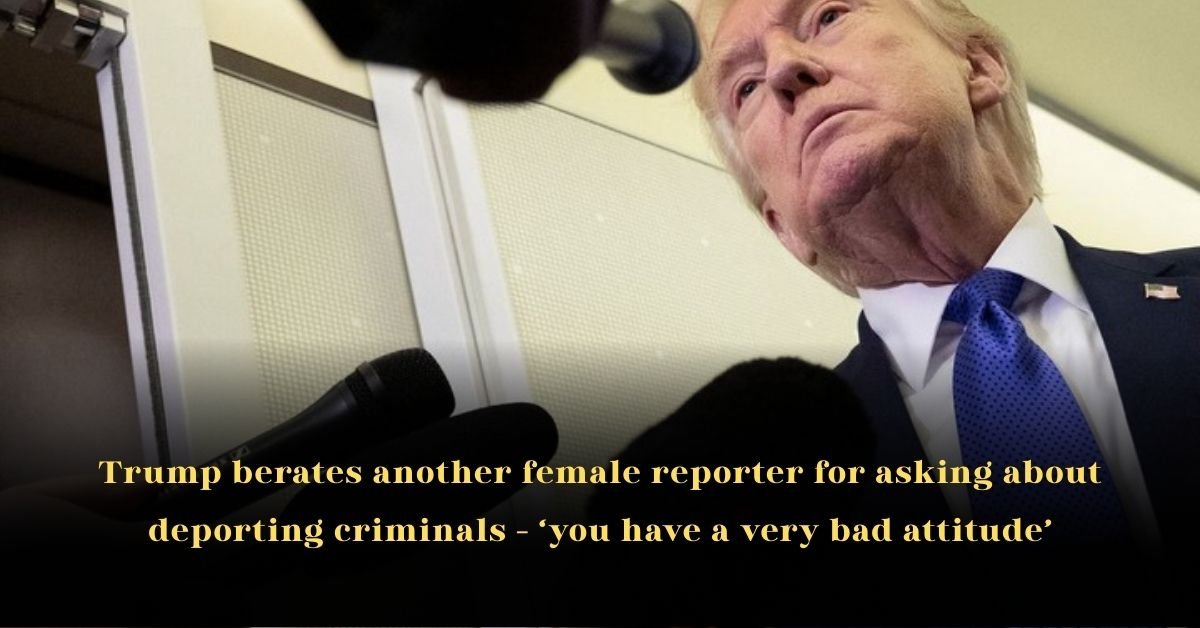
The rules focus on removing immigrants who are undocumented and have committed crimes. The exchange became tense. Trump did not answer the details of her question. Instead, he told the reporter she had a “very bad attitude”. People watching were surprised.
This is another example of Trump’s difficult history with the press. It shows the ongoing problem between the President and journalists. The journalists are trying to get clear answers about important national issues, like deportation policy.
The Contentious Exchange and Policy Inquiry
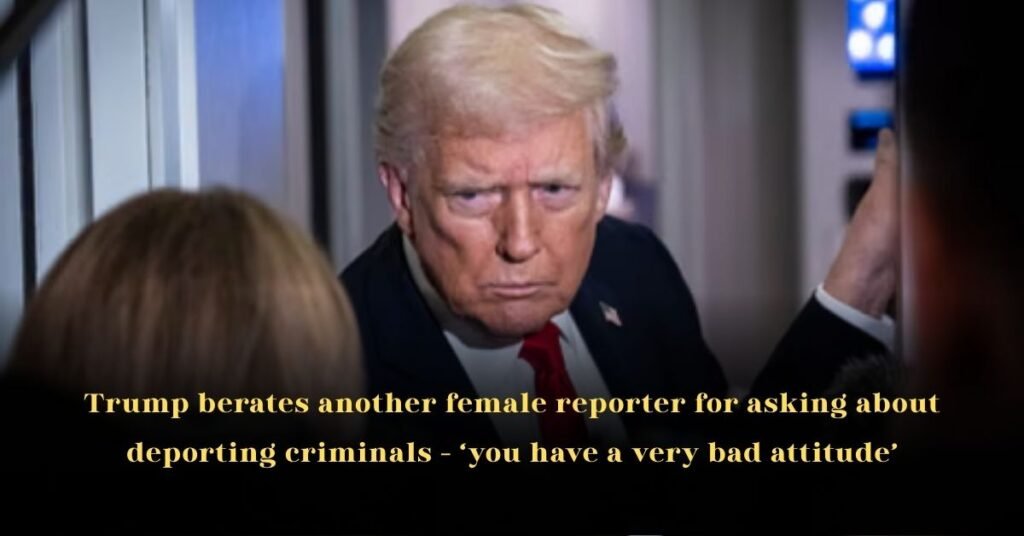
The argument happened while Trump was flying to Palm Beach, Florida. The reporter, who was not immediately named, asked about how the government is removing criminals. As she tried to get clear information, Trump’s response became personal. He focused on how she was asking instead of the policy itself. By saying “you have a very bad attitude,” he stopped the question. This is a common style for Trump: to talk about the person asking the question instead of the topic.
A Recurring Pattern in Media Relations
This is not the first time this has happened. In 2025 and early 2026, Trump has criticized several female reporters.
- Days before, on February 3, he argued with CNN’s Kaitlan Collins. He called her the “worst reporter” and said she should smile.
- He called ABC’s Rachel Scott “obnoxious” for asking about military videos.
- He publicly corrected CBS’s Nancy Cordes about vetting procedures.
- He told Bloomberg’s Catherine Lucey to “be quiet” during a question about the Epstein files.
These arguments get a lot of attention and start debates about how a President should act and how journalists should do their job.
Context: The 2026 Deportation Campaign
This argument happened because of a big, military-style deportation campaign. The government says it is speeding up the removal of over 600,000 people, especially those with criminal records.
- Policy Focus: “Operation Metro Surge” is targeting big cities.
- Policy Focus: Immigrant visas are paused for 75 countries seen as high-risk.
- Policy Focus: They are expanding “expedited removal,” which means people can be deported without a court hearing.
Because these policies are a big deal, journalists are asking more tough questions. This leads to more arguments during press events in Washington D.C. and Palm Beach.
ALSO READ: Fitness Influencer Sanne Vloet Breaks Pregnancy loss: Sharing This with an Open Heart
The Role of the Press in 2026
This event shows the continued bad relationship between the government and the news media. People who support the President often say he is right to fight back against “fake news.” People who support press freedom say attacking journalists personally makes it harder for the media to watch over the government.
As Trump travels often, these tense meetings are expected to continue. The “bad attitude” comment is a sign that now, the way a reporter asks a question is often criticized as much as the government’s policies.
Frequently Asked Questions (FAQ)
Why did Trump tell the reporter she had a “very bad attitude”?
He said it after she asked a follow-up question about how criminals are deported. He felt her continued questioning was a personal attitude problem.
Where did this exchange take place?
It happened on Air Force One, while flying to Palm Beach, Florida.
What is the current status of US deportation policies?
As of February 2026, the government has started “Operation Metro Surge,” paused visas for many countries, and is focusing on removing large numbers of people.
Disclaimer
The news information presented here is based on available reports and reliable sources. Readers should cross-check updates from official news outlets.